
January 6 and the Doctrine of Force

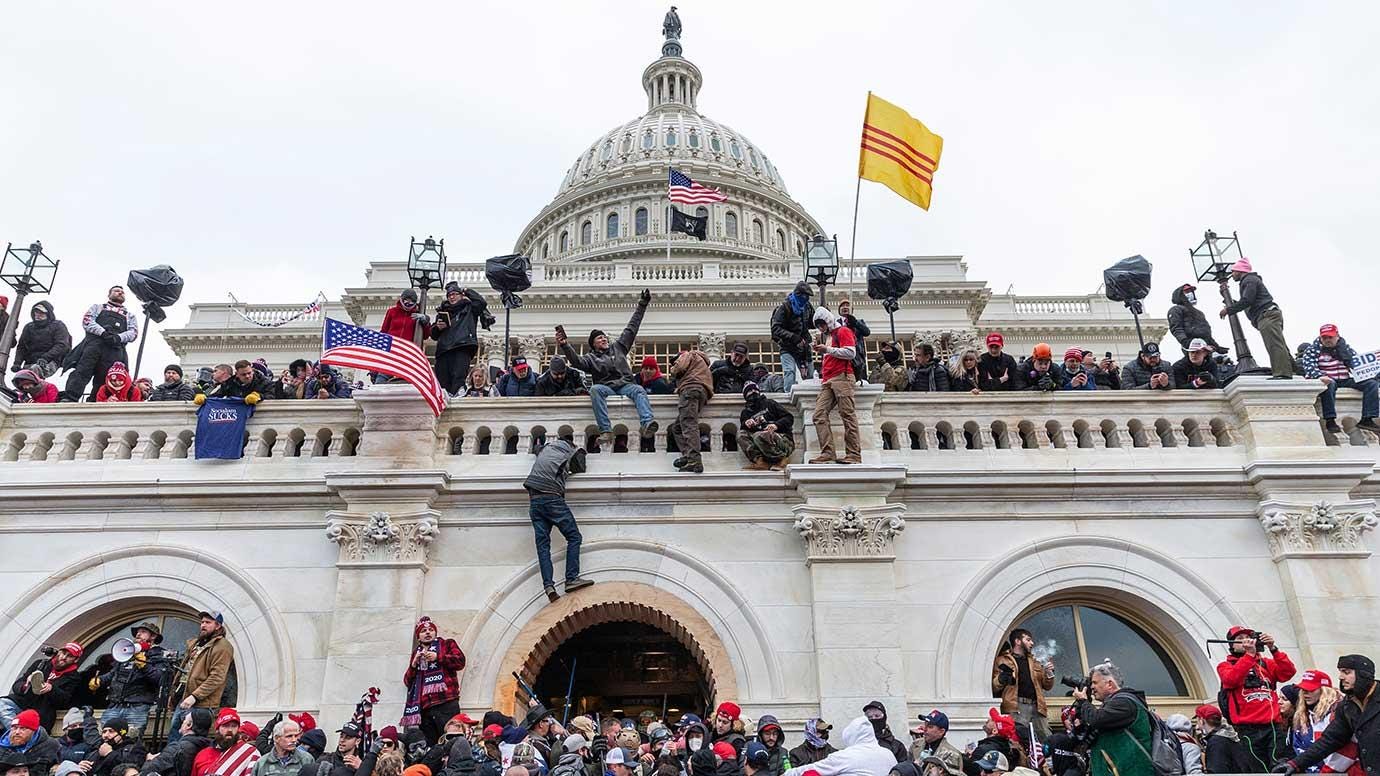
There are moments when history doesn’t feel like a sequence of events so much as a pressure system.
Nothing announces itself. Nothing formally begins. The calendar keeps moving, but something remains suspended in the air, unresolved, unfinished, like a storm that never quite clears the coast. You can go to work. You can cook dinner. You can scroll. And still feel it pressing at the edges of things.
January 6 is one of those moments.
We keep referring to it as a date, as if it were contained there. As if it ended when the building was cleared, the votes were counted, the repairs were made, and the cameras moved on. But some events don’t conclude. They metastasize. They migrate. They surface later in unfamiliar places wearing different uniforms.
This isn’t really about January 6 alone. It’s about what January 6 taught the country, and what the country, slowly and quietly, allowed itself to learn in return. What follows isn’t an argument so much as a record. A tracing of a method as it moved from crowd to state, from spectacle to administration, from domestic disorder to foreign policy.
If this feels dark, it’s because the material is dark. If it feels messy, it’s because the thing it describes never unfolded cleanly. And if it feels familiar in ways that are hard to name, that may be because we are still living inside it.
What ties all of this together is not ideology. It isn’t strategy. It isn’t even cruelty, though cruelty is everywhere.
It is the discovery that violence works.
Not as a breakdown.
Not as an emergency.
As policy.
That is the through line from January 6 to Venezuela, and it runs straight through the mass pardon, the ICE raids, the ghost flights, the prison in El Salvador, the explosions at sea, the language that keeps hardening until it no longer pretends to be metaphor.
January 6 was the first time violence walked openly into the center of American political life and realized it wasn’t being expelled. It lingered. It watched. It learned.
The first official act of the second Trump term was not economic. Not diplomatic. Not administrative.
It was rhetorical.
On January 20, 2025, the administration issued a sweeping mass pardon for the January 6 defendants. The legal relief itself was almost incidental. What defined the act was the framing. The proclamation was titled “National Reconciliation.” The defendants were described as “hostages.”
Men convicted of seditious conspiracy. Men who beat police officers. Men who hunted lawmakers through the Capitol while attempting to halt the constitutional transfer of power by force were formally recast as victims. As patriots. As prisoners of an unjust system.
This was not mercy. It was moral inversion, performed by the state.
A patriot is no longer someone who defends the Constitution. A patriot is someone who uses violence in service of the leader.
That single act did more than empty cells. It rewrote the operating code. Violence against democratic process would be forgiven. Violence in the right direction would be rewarded. Law enforcement would exist to protect power, not principle. Loyalty would outrank legality.
January 6 was no longer a crime. It was retroactively reclassified as a test of allegiance.
From that moment on, violence no longer needed to justify itself. It only needed to remember who it was for. Everything that followed became legible.
We still talk about January 6 as if it were an eruption. As if something snapped. But nothing about that day was chaotic in the way people mean when they say chaos.
It was ritualistic. Symbolic. Self-aware.
The costumes. The flags. The chants. The gallows erected not to be used, but to be filmed. The way people searched for cameras before searching for lawmakers.
This wasn’t violence born of desperation. It was violence as communication.
January 6 asked a very specific question: what happens if we do this?
The answer did not arrive that afternoon. It arrived slowly, through delay and diffusion and the long American art of letting time dissolve responsibility. No immediate reckoning. No institutional reflex strong enough to reassert control. No line drawn that could not be crossed again.
Very little happened.
That answer did not just register with the crowd. It registered with power.
The crucial shift since January 6 is this: the state absorbed the lesson the mob was trying to teach. Violence does not need to be hidden. It does not need to be justified in advance. It does not need to be coherent.
It only needs to be visible.
Once that clicks, policy changes shape. Immigration stops being administration and becomes enforcement theater. Raids become the message. Arrests become performances. Cruelty becomes deterrence.
The dawn ICE raid is not an operational necessity. It is a warning. The language of “invasion” is not analysis. It is authorization.
And now the courts are part of the lesson.
In March 2025, a federal judge issued a verbal order directing the administration to turn deportation planes around. The planes kept flying.
The speed was the response.
Men were already in the air, en route to a foreign mega-prison designed not for detention, but for erasure.
The administration invoked the Alien Enemies Act of 1798, a wartime statute pulled from the shelf nearly two and a half centuries after it was written, to justify the removals. The age of the law wasn’t a flaw. It was the point.
This is not legal reasoning. It is governing style. Old laws wielded like blunt instruments. Process outrun by speed. Judges addressed after the fact.
CECOT, the concentration camp in El Salvador admired openly by American officials, is not an outlier. It is the infrastructure expression of violence as policy. A place designed to be beyond reach, beyond oversight, beyond due process. Order achieved through disappearance.
January 6 logic refined. Act first. Litigate later. Let time and distance finish the job. Speed becomes sovereign. The law remains, but only as a lagging indicator.
Once violence is accepted domestically as policy, it doesn’t merely travel. It escalates in plain sight.
The Caribbean bombings and the arrest of Nicolás Maduro were not separate actions. They were the opening and closing brackets of the same operation. The destruction of boats in international waters did not serve a strategic necessity that couldn’t have been handled quietly. What it provided was conditioning.
Explosions on camera.
Force without paperwork.
Violence framed as competence.
The public eye was trained to accept sudden, extraterritorial action as normal, even reassuring. By the time U.S. forces entered Caracas, the country had already been walked through the visual grammar. The sound and fury had been rehearsed. What followed no longer registered as escalation. It felt like continuation.
This was not diplomacy. It was not law enforcement. It was not war in any traditional sense. It was demonstration completing itself.
The raid.
The explosions.
The extraction.
And then the image that sealed the lesson.
After landing in New York, Nicolás Maduro was subjected to a literal perp walk through a Manhattan DEA field office. Marched. Photographed. Processed. A foreign head of state reduced to the visual grammar of American crime television.
The White House leaned into the theatricality of his detention, emphasizing the Brooklyn jail, the optics of stripping a rival of status and context. De-platforming, not merely incarcerating. Distraction.
The perp walk is not about justice. It is about humiliation made legible to the camera. Guilt established through choreography.
This is what the mob wanted on January 6. Zip ties. Forced marches. The image doing the work.
They failed.
The state didn’t.
The administration has now given this governing style a name. The President declared that the “Donroe Doctrine” supersedes the Monroe Doctrine “by a lot.”
The name itself exposes the degradation. Donroe. Not a theory, not a school, not even a serious revision. Just a sound-alike, as if a child had scribbled over the original in crayon and written mine on top.
It isn’t clever. It isn’t ironic. It isn’t strategic. It’s a brand, designed for repetition rather than thought. It signals possession rather than principle. History flattened into something chantable.
That infantilism is diagnostic. Doctrine reduced to a nickname tells you exactly who this is for. Not diplomats. Not allies. Not citizens.
A crowd.
And a crowd doesn’t require coherence. It requires recognition.
The National Security Strategy adds a formal corollary: the Western Hemisphere is “our neighborhood,” and any non-hemispheric engagement is treated as trespass.
This is not geopolitics. It is ownership language.
The Monroe Doctrine spoke the grammar of influence. This “Donroe Doctrine” speaks the grammar of title.
January 6 was the domestic prototype. The “Donroe Doctrine” is the export model. Same move. Bigger map.
Then the rhetoric shifted again. Oil. Reimbursement. Money “coming out of the ground.”
This is a protection racket, rendered as policy.
We did this. Now you owe us.
January 6 established the logic at home. Loyalty earns pardon. Violence earns forgiveness. Crimes committed in the right direction are not crimes at all.
Venezuela extends it abroad. Violence creates obligation. Obligation becomes revenue.
And now the method has a ledger. The July 2025 “One Big Beautiful Bill” Act quietly funded the deportation and detention machinery that makes all of this scalable. When violence appears in a spreadsheet, when it is forecast, allocated, and approved, the revolution is over and the administration has begun.
The violence described here is no longer improvised.
It is budgeted.
At some point, a word stops being rhetorical and starts being accurate.
For years, many resisted using it. We substituted softer phrases. We treated the word as overheated, historically imprecise, better left to textbooks and memory. We said “authoritarian” or “illiberal,” as if the right adjective might slow the thing itself.
But words exist to describe reality, not to cushion it. And the accumulated evidence leaves little room for euphemism.
What we are witnessing is not the emergence of a fascist state. It is the normalization of fascism as governing doctrine in the United States in 2026.
Not fascism as costume or nostalgia. Not as mass rallies or aesthetic excess. But fascism as method: the merger of leader and state, the substitution of violence for law, the redefinition of loyalty as legality, the use of spectacle to replace deliberation, the reduction of citizenship to audience, and the treatment of entire populations as obstacles to be removed rather than participants to be governed.
This conclusion is not drawn lightly. It arrives after watching the same patterns repeat across domains—domestic and foreign, legal and extralegal, rhetorical and physical—until denial itself becomes distortion.
None of this works without institutional compliance. And compliance does not always look like agreement. Sometimes it looks like silence.
Congress reacts after the fact. Courts issue rulings that arrive too late to matter. The Supreme Court, the supposed firewall, says almost nothing at all.
Institutions haven’t vanished. They’ve gone translucent.
January 6 trained them. It taught them that escalation would be tolerated, normalized, absorbed.
Now violence doesn’t pretend to be exceptional. It is administration. It is governance. It is method.
This is why all of this feels like the same event. Not because the targets are the same, but because the method is.
Violence as message.
Violence as deterrent.
Violence as extraction.
Violence as proof of seriousness.
January 6 was not a breakdown.
It was a rehearsal.
ICE raids.
Ghost flights.
CECOT.
Explosions at sea.
Perp walks of foreign leaders.
This is the sentence January started writing.
The darkness people feel now isn’t panic.
It’s recognition.